On favorites, and America's everlasting dream
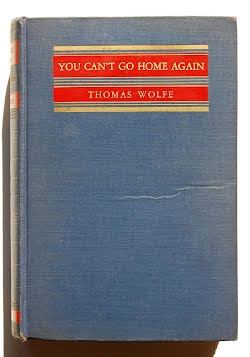
At my age, I've outgrown the notion of "favorites." (Can we outgrow it as a society too? People sometimes ask my toddler to name her "favorite" color. I know they mean well, but she always seems so stumped by the question, but I don't want to encourage her to conjure a fake answer. She's two! All colors are awesome.)
That said: I'm currently re-reading Thomas Wolfe's You Can't Go Home Again, which I decided was my favorite novel when I read it one slow sunburned summer at age 19 or 20. And I have to say, it's still got it.
An excerpt:
I believe that we are lost here in America, but I believe we shall be found. And this belief, which mounts now to the catharsis of knowledge and conviction, is for me—and I think for all of us—not only our own hope, but America’s everlasting, living dream. I think the life which we have fashioned in America, and which has fashioned us—the forms we made, the cells that grew, the honeycomb that was created—was self-destructive in its nature, and must be destroyed.
I think these forms are dying, and must die, just as I know that America and the people in it are deathless, undiscovered, and immortal, and must live. I think the true discovery of America is before us. I think the true fulfillment of our spirit, of our people, of our mighty and immortal land, is yet to come. I think the true discovery of our own democracy is still before us. And I think that all these things are certain as the morning, as inevitable as noon.
The online clamor
"At the time, like many of her friends, she was frozen, unsure of how to proceed. In Oakland, where she lives, it felt like everyone she knew was asking themselves, 'What is the point of what I am doing? Am I adding anything to the world?' At the same time, it felt difficult to distance oneself from the online clamor long enough to formulate an answer."
-- from the NYT Book Review of Jenny Odell's “How to Do Nothing: Resisting the Attention Economy." I really, really liked the essay she wrote which apparently led to the book. If I can pry myself away from the Internet for long enough maybe I'll actually read the book too.
Starting -- and hanging in
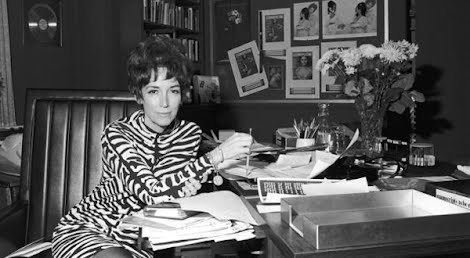
"How old are you? Twenty-one? Thirty? It doesn't matter -- you need only to have some kind of job somewhere. Then, from that most unillustrious beginning, however young or old you are, you move ever so gradually up, and, if you stay with it, the gradual moving up takes you to the top.
Hopeful shopping
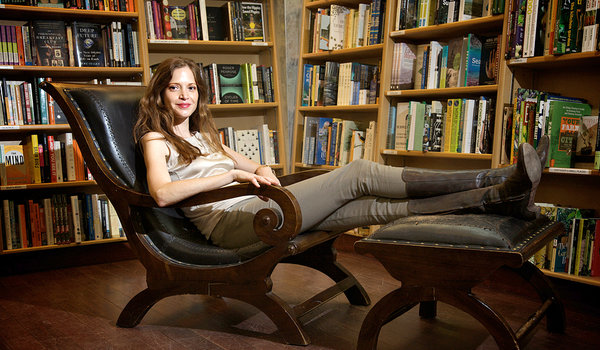
Last week the New York Times' Thursday Styles section profiled bookstore owner Sarah McNally, who owns "the determinedly WiFi-free McNally Jackson Books on Prince Street in Nolita." It was a really enjoyable read, and here are a few reasons why:
The machine can cost more than $100,000, a huge investment for an independent bookstore, but it makes sense when the NYT describes it as "Ms. McNally's grand gambit against the e-book pestilence." I also loved this description:
Ms. McNally gazed tenderly at the behemoth as it printed 'Veiled Women,' by Marmaduke Pickinthall (1913) for a customer. "Look," she cooed, as mechanical thingamabobs measured and bound the new book. "It's still warm, like cookies fresh out of the oven."
And the profile is full of little tidbits as evidence. To wit:
She sipped tea, coughing, her thin body shaking. Bad cold? "Technically, I had tuberculosis," she said with a shrug.
I always think of aspirational shopping as purchasing a fancy pair of shoes that don't fit into your lifestyle, a pair of jeans that are too snug, or a luxury car you can't quite afford. But buying books can be similar in that it represents the kind of person you hope to be, knowledge you hope to have in the future. I never thought of it that way until I read this:

